The ESP32-H2 SuperMini Development Board Microcontroller Programming Learning Controller Core on AliExpress costs $5 — that’s $3 (39%) less than the reviewer’s pick at $8. Buy if the spec match works for you; swipe to see the other alternatives below.
Swipe through 1 altBuy, save, or swipe past — pick what fits
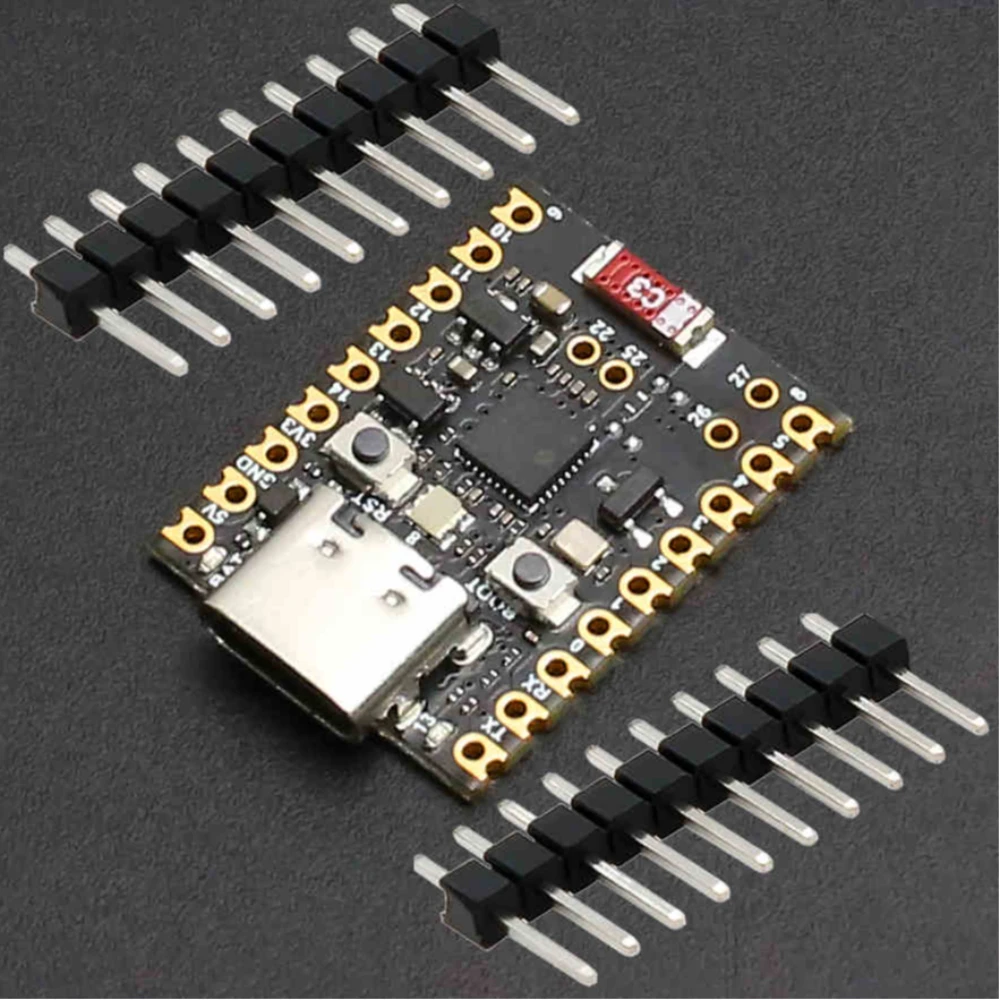
ESP32-H2 SuperMini Development Board Microcontroller Programming Learning Controller Core
ESP32-H2 SuperMini Development Board Microcontroller Programming Learning Contro
ESP32-H2 SuperMini Development Board Microcontroller Programming Learning Controller Core
ESP32-H2 chip vs. standard ESP32 — H2 uses RISC-V core (not Xtensa dual-core), supports only Zigbee/Thread/BLE (no Wi-Fi 802.11 b/g/n), making it NOT a drop-in replacement
$4.86
Buy on AliExpress — $4.86Where they actually differ
- Diff 1: ESP32-H2 chip vs. standard ESP32 — H2 uses RISC-V core (not Xtensa dual-core), supports only Zigbee/Thread/BLE (no Wi-Fi 802.11 b/g/n), making it NOT a drop-in replacement
- Diff 2: SuperMini form factor is significantly smaller than standard ESP32 dev boards (e.g., DevKitC or WROOM modules)
- Diff 3: No Wi-Fi capability on H2 variant — a critical missing feature for most ESP32 tutorials and projects
- Diff 4: Price ($4.86) is lower than reference (~$8), consistent with a different/lesser-featured variant
FAQ
Is the AliExpress version really the same product?
No — not in the conventional sense. The ESP32-H2 is a different chip from the standard ESP32: it uses a RISC-V core instead of Xtensa dual-core, and it has no Wi-Fi. It is a legitimate Espressif product, but it is a distinct variant with a narrower feature set. Buyers who need Wi-Fi must purchase a standard ESP32, ESP32-S2, or ESP32-S3 instead.
How long does shipping take?
Standard shipping from China typically takes 15–45 days. AliExpress Choice sellers with US or EU warehouse stock can deliver in 7–15 days, but SuperMini boards are not always available from local warehouses. Check the 'Ships from' field on the listing before purchasing if timeline matters for your project.
What if it arrives damaged or doesn't work?
AliExpress Buyer Protection covers damaged or non-functional items if reported within the dispute window (typically 15 days after the delivery confirmation). Document the issue with photos or a short video before opening a dispute. For a $4.86 item, most sellers will offer a refund or replacement without requiring a return shipment.
Does the ESP32-H2 work with the Arduino IDE or ESP-IDF?
Yes, Espressif officially supports the ESP32-H2 in ESP-IDF v5.0+ and in the Arduino ESP32 core (v2.0.14+), but support is newer and less battle-tested than for standard Xtensa-based ESP32 boards. Some Arduino libraries that use Xtensa assembly optimizations will not compile for RISC-V. Always check library compatibility before committing to the H2 for a specific project.
Does it work with macOS, Windows, and Linux for programming?
Yes — flashing is done via USB-to-serial and works across macOS, Windows, and Linux using esptool.py or the Arduino IDE. The SuperMini typically uses a USB-C connector with an onboard CH340 or CP2102 chip; install the appropriate driver on Windows if the port is not recognized automatically. Linux usually requires no additional driver.
Does the ESP32-H2 support HomeKit, Alexa, or Google Home?
The ESP32-H2 supports Matter over Thread, which is the underlying protocol that Apple Home (HomeKit), Amazon Alexa, and Google Home all adopted starting in 2022–2023. However, you need a Thread border router (such as an Apple HomePod mini, Google Nest Hub 2nd gen, or Amazon Echo 4th gen) already on your network for Thread devices to connect. Direct Wi-Fi-based smart-home integrations are not possible on this chip.
Can the ESP32-H2 replace the standard ESP32 in the AI-driven workflow shown by Andreas Spiess?
Not directly. The Spiess workflow targets standard ESP32 (Xtensa core) and leverages Wi-Fi for connectivity tasks demonstrated in the video. Porting that workflow to the ESP32-H2 requires switching to a RISC-V toolchain and reworking any Wi-Fi-dependent code. Experienced developers can do this, but it is not a beginner-friendly swap.
What is the GPIO and peripheral count on the SuperMini form factor?
The ESP32-H2 SuperMini exposes approximately 11–15 GPIO pins depending on the specific PCB layout, compared to 30–38 GPIOs on a full-size DevKitC. It retains I2C, SPI, UART, and ADC peripherals. The smaller pin count is a real constraint for projects that need many simultaneous peripherals — verify your pin requirements against the specific seller's pinout diagram before ordering.
- Product
- ComparisonReview
- ItemList
- FAQPage
- BreadcrumbList
- VideoObject