AliExpress alternative to the Texas Instruments Millimeter Wave Sensor Module
The closest AliExpress match to the Texas Instruments Millimeter Wave Sensor Module is listed at $116. Buy if the spec match works for you; swipe through the rest.
Where they differ: Candidate is based on IWR1843/AWR1843 chip specifically — original TI module model is… · +2 more
Affiliate disclosure: we may earn a commission when you buy through links on this page, at no extra cost to you.
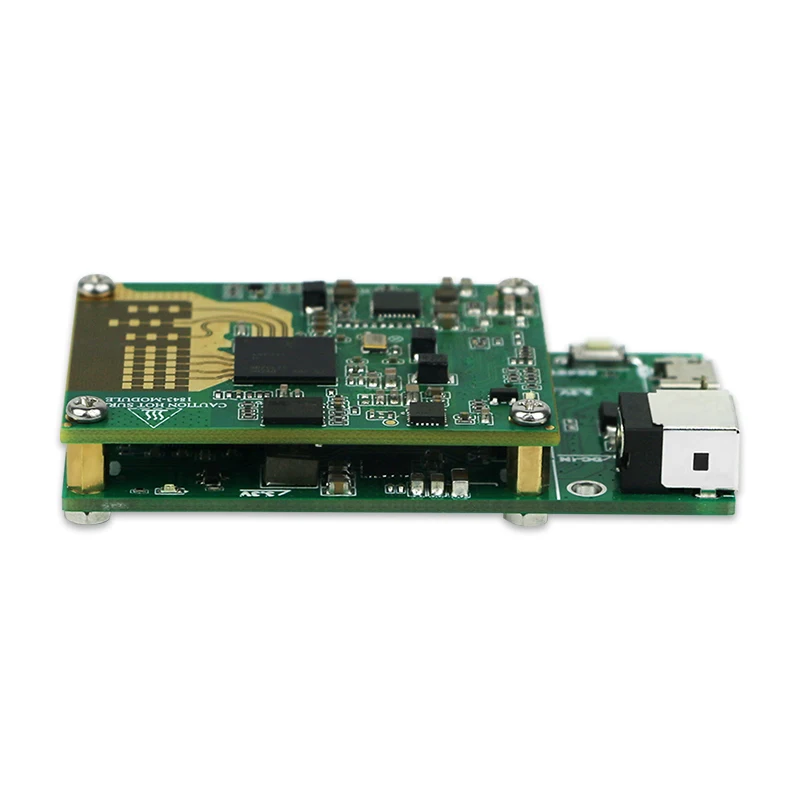
IWR1843 79GHz Millimeter-Wave Radar Module
Close — see differences
IWR1843 79GHz Millimeter-Wave Radar Module
Close — see differences
More alternatives
IWR1843 79GHz Millimeter-Wave Radar Module
$115.52
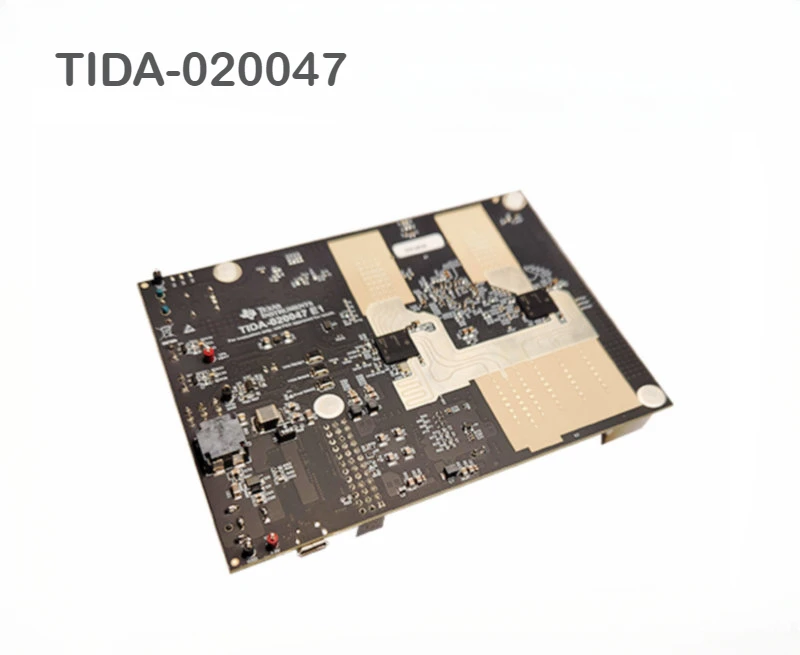
TIDA-020047 Automotive 4D Imaging Radar Dual Device MM Wave Cascade Reference Design Senso
$654.40
IWR1843 79GHz Millimeter-Wave Radar Module
Candidate is based on IWR1843/AWR1843 chip specifically — original TI module model is unspecified, may differ
$115.52
Close — see differences
Buy on AliExpress — $115.52TIDA-020047 Automotive 4D Imaging Radar Dual Device MM Wave Cascade Reference Design Senso
Candidate is TIDA-020047, an automotive 4D imaging radar cascade reference design (dual-device, high-end automotive use), not a general-purpose smart home mmWave sensor module
$654.40
Close — see differences
Buy on AliExpress — $654.40Where they actually differ
- Diff 1: Candidate is based on IWR1843/AWR1843 chip specifically — original TI module model is unspecified, may differ
- Diff 2: This appears to be a third-party core board/breakout module, not TI's official EVM or production module
- Diff 3: Degraded mode — no reference image available to confirm visual/form-factor match
FAQ
Is the AliExpress IWR1843/AWR1843 core board really the same product as TI's mmWave module?
It uses the same TI radar silicon (IWR1843 or AWR1843, 79 GHz), so the core RF function is equivalent. However, this is a third-party breakout board, not TI's official Evaluation Module, which means the PCB layout, connector pinout, and bundled firmware support may differ. The verifier could not confirm form-factor parity due to missing reference images, so treat this as a functional equivalent rather than a drop-in replacement.
Does the IWR1843/AWR1843 board work with TI's mmWave SDK and mmWave Studio?
TI's mmWave SDK targets the IWR and AWR chip families, so the core firmware should be compatible at the silicon level. In practice, third-party breakout boards sometimes use non-standard JTAG or UART header layouts that require adapter cables or custom board configuration files. Check whether the seller provides a schematic before assuming the SDK's out-of-box demos will run without modification.
Will this 79 GHz module work with Home Assistant or other smart-home platforms for presence detection?
The IWR1843 can be used for people-counting and presence detection — the use case Smart Home Solver covers — but it requires custom firmware or a middleware layer to produce Home Assistant-compatible MQTT output. It does not natively support HomeKit, Alexa, or Google Home. Most DIY integrations use ESPHome or a companion microcontroller to bridge the radar output to a home-automation hub.
What is the operating voltage, and does the board include a power supply or USB interface?
TI's IWR1843 EVM typically runs on a 5V USB input with on-board regulators supplying the 1.8V and 3.3V rails needed by the chip. Third-party core boards vary — some expose raw power pins requiring a bench supply, others include a USB-C or micro-USB interface. Confirm the power input specification with the seller, as applying incorrect voltage will damage the RF front-end.
What is the difference between the IWR1843 and AWR1843, and does it matter which one I receive?
The IWR1843 is qualified for industrial environments; the AWR1843 is qualified for automotive applications and carries AEC-Q100 certification. For home-automation prototyping either chip works functionally, but the firmware image and mmWave SDK configuration file must match the specific device. Since this listing groups both variants, confirm with the seller which chip is actually populated on the board you will receive.
Is 79 GHz mmWave safe to use indoors, and does it require any regulatory approval for home use?
In the United States, 77–81 GHz radar operation for unlicensed indoor sensing falls under FCC Part 15 rules, and TI's modules are designed to operate within those limits. A third-party core board is not itself FCC-certified, so using it in a finished product intended for sale would require separate approval. For personal prototyping and experimentation indoors, the transmit power levels involved are well below exposure limits set by the FCC and ICNIRP.
Shipping times and Buyer Protection apply to every AliExpress order — see our Buying from AliExpress guide.
Prefer Telegram? Get this deal delivered in our bot.
Get this deal in Telegram →