AliExpress alternative to the Poly Maker Galaxy Red PLA Filament
The closest AliExpress match to the Poly Maker Galaxy Red PLA Filament is listed at $45.
Where they differ: original is Poly Maker, the AliExpress listing is HP3DF, different manufacturers with different… · +2 more
Affiliate disclosure: we may earn a commission when you buy through links on this page, at no extra cost to you.
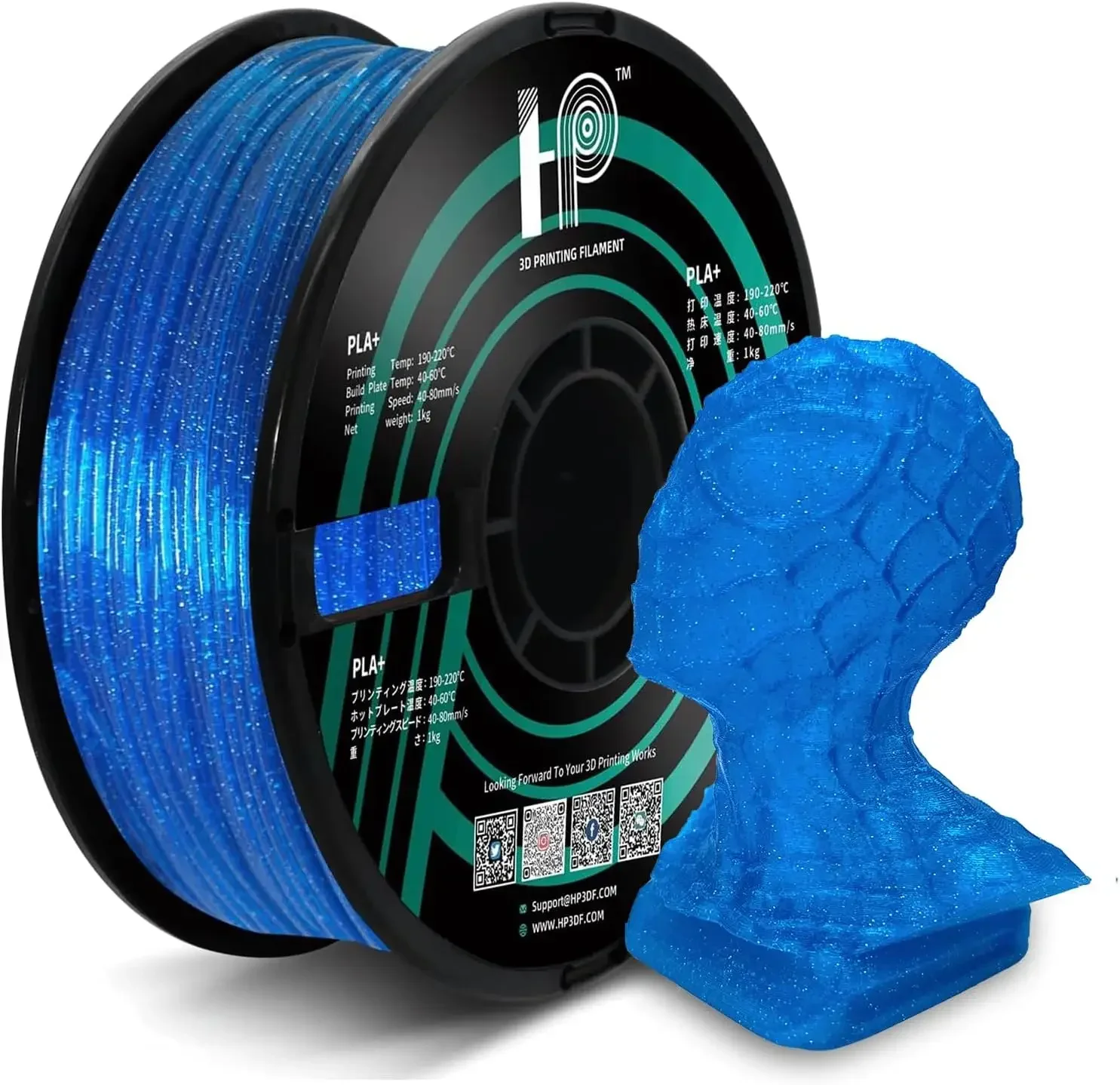
3D Printer Filament 1KG Spool (2.2 lbs),HP3DF PLA Filament,1.75mm Dimensional…
Close, see differences
3D Printer Filament 1KG Spool (2.2 lbs),HP3DF PLA Filament,1.75mm Dimensional…
Close, see differences
More alternatives
3D Printer Filament 1KG Spool (2.2 lbs),HP3DF PLA Filament,1.75mm Dimensional Accuracy…
$44.68
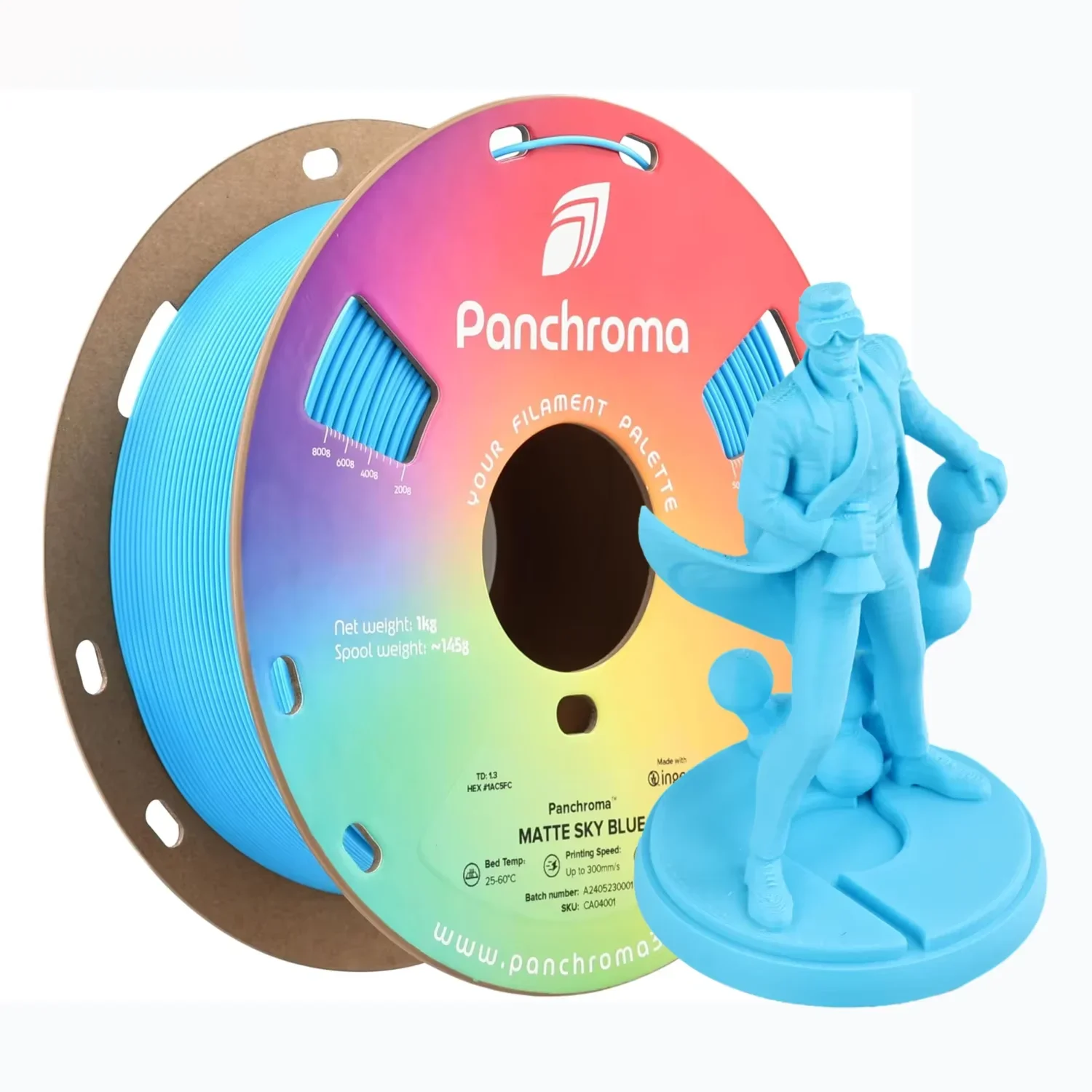
Polymaker PolyTerra PLA (Panchroma Matte) filament 1.75mm 1kg, matte finish for…
$46.82

3D Printer Filament Galaxy PLA Filament 1.75mm, 250g*4pack, 3D Printing Filament, Multi…
$53.65
3D Printer Filament 1KG Spool (2.2 lbs),HP3DF PLA Filament,1.75mm Dimensional Accuracy…
Brand mismatch: original is Poly Maker, the AliExpress listing is HP3DF, different manufacturers with different quality reputations
| brand | Poly Maker | HP3DF |
|---|---|---|
| diameter | 1.75mm | 1.75mm |
| weight | 1kg | 1KG |
$44.68
Close, see differences
Buy on AliExpress $44.68Polymaker PolyTerra PLA (Panchroma Matte) filament 1.75mm 1kg, matte finish for…
Original is Poly Maker Galaxy Red PLA (sparkle/glitter finish); the AliExpress listing is PolyTerra Panchroma Matte Sky Blue PLA (matte finish, no sparkle)
| brand | Poly Maker | Polymaker |
|---|---|---|
| color series | Galaxy Red | Panchroma Matte |
| product line | PLA | PolyTerra PLA |
| weight | 1kg | 1kg |
$46.82
Close, see differences
Buy on AliExpress $46.823D Printer Filament Galaxy PLA Filament 1.75mm, 250g*4pack, 3D Printing Filament, Multi…
Original is Poly Maker brand Galaxy Red PLA (single color: red); the AliExpress listing is an unbranded generic multi-color 4-pack (gold, green, black, purple/blue, no red variant visible)
$53.65
Close, see differences
Buy on AliExpress $53.65Is a cheap no-name PLA filament worth it?
PLA is the easiest, lowest-temperature filament to run, and the base plastic in a cheap spool is legit. It is a non-toxic bioplastic that gives off far fewer ultrafine particles than ABS, and independent bench testing has found plain budget PLA matching or beating pricier 'PLA+' on raw strength. For toys, brackets, ornaments, prototypes and everyday display parts printed in a ventilated room, a cheap no-name spool is genuinely one of the easier, lower-risk materials to run, and a natural or uncolored roll sidesteps the biggest contamination worry.
When it arrives, run a digital caliper along the first meter or two at several points. Steady readings within about plus or minus 0.03mm of 1.75mm print smoothly, and swings past about 0.10mm mean a poorly made or recycled roll that will clog.
Where the cheap ones cut corners
Bright colored no-name spools can carry heavy metals, including lead
Peer-reviewed testing of consumer filaments found metals riding in on the colored dyes and additives, and detected lead and arsenic among the particles. A cheap unlabeled spool ships with no Safety Data Sheet, so you cannot confirm it is clean, which makes a bright no-name roll a poor pick for anything you eat or drink from or that a young child might chew.
Sources: pmc.ncbi.nlm.nih.gov
Melting it releases ultrafine particles and VOCs you cannot vet
Every filament gives off ultrafine particles small enough to lodge deep in the lungs, plus volatile organic compounds. Branded spools publish a Safety Data Sheet so you can check what is in the plastic, but a no-name roll usually gives you no SDS and no additive list, so you are breathing an unknown mix. Print in a ventilated room or a filtered enclosure, not a closed bedroom.
Sources: epa.goven.wikipedia.org
Diameter wanders off 1.75mm, so extrusion goes uneven and can jam
The one number you are really paying for is how tightly the strand holds 1.75mm along its whole length, and cheap rolls are where it wanders. Fat spots drag or block the nozzle while thin spots leave gaps and weak, banded layers, and community caliper checks have found budget strands swinging from 1.6mm to 2.0mm on plastic sold as 1.75mm.
Sources: sovol3d.comprintersociety.commatterhackers.comforum.prusa3d.com
The plastic may be recycled or contaminated, not virgin PLA
Some cheap spools cut cost with reground, recycled or filler-loaded resin sold as virgin PLA, and you cannot verify purity from an unbranded listing. That plastic bonds worse between layers so parts come out weaker, foreign specks build up and block the nozzle, and peer-reviewed work shows extrusion turns unstable and brittle as recycled content climbs.
The flashy glitter, silk and glow finishes grind down a brass nozzle
The glitter, silk, marble, glow and carbon-fill spools these sellers push hardest are loaded with hard particles. On the standard brass nozzle most printers ship with, those additives can wear the tip out in a few hundred grams, long before you would expect to replace it.
Sources: cnckitchen.com3das.ie
It can arrive already brittle, and drying will not fully fix it
PLA soaks up water from the air, and cheap or aged stock often ships with no vacuum seal and no desiccant, so you have no idea how long it sat unsealed in a warehouse. Damp PLA pops and hisses as it prints and snaps in the feed tube, and once moisture has shortened the polymer chains that chemical damage does not reverse even after you dry the spool.
Sources: forum.bambulab.comwiki.polymaker.com
Sloppy spool winding knots up and kills long prints
Budget rolls are often wound loosely or cross-wound at the factory, so one loop slips under another and cinches into a knot partway through a job. The extruder cannot pull past the knot, so the print fails, frequently many hours in.
Sources: forum.prusa3d.com
The PLA+ label and the tolerance number are unregulated marketing
There is no industry definition of the plus in PLA+ or of the tolerance figure a seller prints on the label, and nobody verifies either. Independent community testing regularly finds budget spools measuring looser than their printed claim, so treat an inflated spec as marketing you should measure yourself, not a guarantee.
Sources: wevolver.comfilamentprofileshub.com
The honest bottom line
For casual, low-stakes printing such as toys, ornaments, brackets, test fits and throwaway prototypes, ideally in a natural or uncolored PLA printed in a ventilated room, a cheap no-name spool is a reasonable buy, and the plastic itself costs only pennies per print. Spend up on a named brand with a published Safety Data Sheet and a verified diameter tolerance if you print anything you eat or drink from, anything a young child might chew, long or precise jobs where a wandering strand ruins the part, or high-volume work where a single mid-print jam costs more time than the roll ever saved.
Drawn from peer-reviewed studies and a US EPA science advisory on 3D-printer emissions, an encyclopedia health-and-safety overview, independent multi-brand filament tests, filament makers' own quality guides, and hobbyist repair and printing forums. No seller listings were used as sources.
More sources: epa.govcnckitchen.comforum.prusa3d.com3dstartpoint.comgoodprints3d.comsovol3d.com
Where they actually differ
- Brand mismatch: original is Poly Maker, the AliExpress listing is HP3DF, different manufacturers with different quality reputations
- Color mismatch: original is Galaxy Red, the AliExpress listing image shows a glittery/sparkle Blue color
- Material specification differs: original is PLA, the AliExpress listing is PLA+
FAQ
Is the AliExpress version really the same product?
This answer covers the Polymaker PolyTerra PLA (Panchroma Matte)… option on this page. No. The AliExpress listing is Polymaker PolyTerra Panchroma Matte in Sky Blue, which is a different product line, a different finish (matte vs. glitter), and a different color (blue vs. red) from the Poly Maker Galaxy Red PLA reviewed by Zack Freedman. These are not interchangeable products, and there is no basis for treating them as equivalent substitutes.
How long does shipping take?
This answer covers the Polymaker PolyTerra PLA (Panchroma Matte)… option on this page. AliExpress filament orders typically arrive in 15-45 days. Listings fulfilled from US or EU warehouses can arrive in 10-15 days, while orders shipped from China under AliExpress Standard Shipping usually take 30-45 days. Check the listing's warehouse location before ordering if delivery timeline matters for your project.
What if it arrives damaged or doesn't work?
This answer covers the Polymaker PolyTerra PLA (Panchroma Matte)… option on this page. AliExpress Buyer Protection covers items that arrive damaged, defective, or significantly not as described, and disputes can be opened within 15 days of delivery confirmation. For filament, 'not as described' claims are straightforward if the color or finish differs from the listing photo. Keep unboxing documentation (photos/video) to support any dispute.
What's the battery platform? Is it cross-compatible with my existing batteries?
This answer covers the Polymaker PolyTerra PLA (Panchroma Matte)… option on this page. This comparison involves PLA filament, not a battery-powered tool. Galaxy Red PLA and PolyTerra Matte PLA are both passive materials with no power requirements. The relevant compatibility question is slicer profile compatibility, print settings optimized for Galaxy PLA (which contains metallic additive pigments) should not be assumed to work identically for PolyTerra Matte PLA.
Does the Galaxy finish require any special print settings compared to standard PLA?
This answer covers the Polymaker PolyTerra PLA (Panchroma Matte)… option on this page. Galaxy PLA filaments typically print at similar temperatures to standard PLA (190-220°C nozzle, 60°C bed), but the metallic/glitter particles can accelerate nozzle wear on brass nozzles. A hardened steel nozzle is recommended for extended Galaxy PLA printing. PolyTerra Matte PLA does not contain abrasive particles and is safe for standard brass nozzles.
Can either filament be used for functional RC car or drone parts?
This answer covers the Polymaker PolyTerra PLA (Panchroma Matte)… option on this page. Standard PLA, including both Galaxy and PolyTerra formulations, has a relatively low heat deflection temperature (around 60°C), which limits its use in high-stress or high-heat RC applications like motor mounts. Zack Freedman's RMRRF 2026 project used Galaxy Red PLA for visual and structural jousting components, not heat-critical drivetrain parts. For heat-exposed RC components, PLA+ or PETG are more appropriate.
Is 1.75mm the correct diameter for most consumer FDM printers?
This answer covers the Polymaker PolyTerra PLA (Panchroma Matte)… option on this page. Yes, 1.75mm is the standard filament diameter for the vast majority of consumer FDM printers including Bambu Lab, Prusa, Creality, and Elegoo machines. The AliExpress listing specifies 1.75mm and 1kg spool weight, which are standard specifications. Verify your printer's extruder compatibility before ordering, as a small number of printers use 2.85mm filament.
Are there any AliExpress listings that actually carry Polymaker Galaxy Red PLA?
Polymaker does sell through AliExpress via its official store, and Galaxy-series filaments are part of the Polymaker product catalog. Search specifically for 'Polymaker Galaxy Red PLA 1.75mm' within the Polymaker Official Store on AliExpress to find the correct product line. The listing reviewed on this page, PolyTerra Panchroma Matte Sky Blue, is not a match for Galaxy Red regardless of price.
Shipping times and Buyer Protection apply to every AliExpress order. See our Buying from AliExpress guide.
Prefer Telegram? Get this deal delivered in our bot.
Get this deal in Telegram →More 3d printing to buy
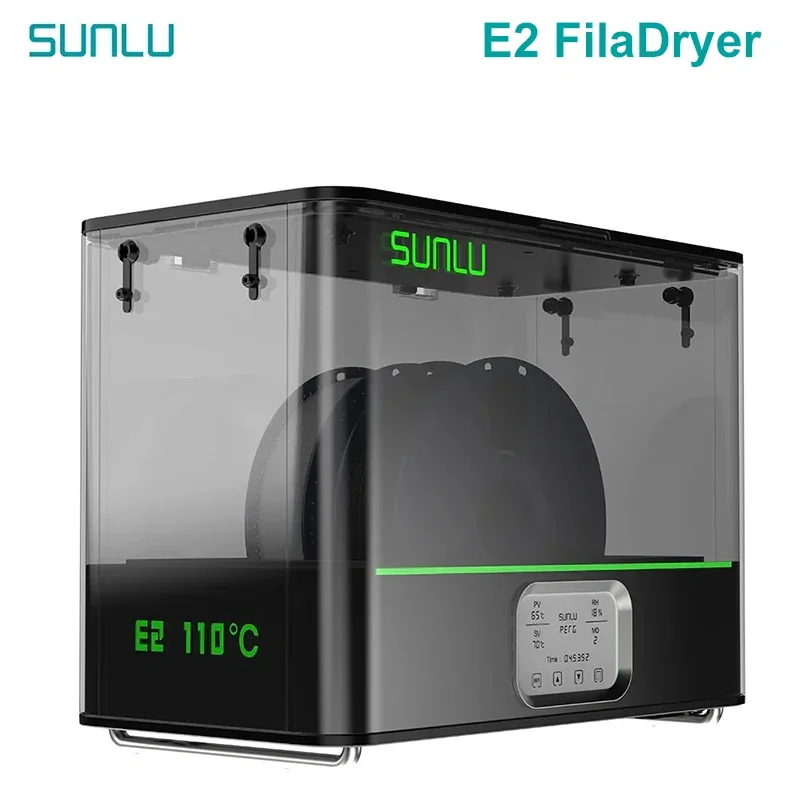
SUNLU Offical E2 FilaDryer Up to 110℃ Professional Drying and Annealing Born for ABS-CF, PC PA6-GF, PA6-CF, PA12-CF, PA612-CF
$299.99
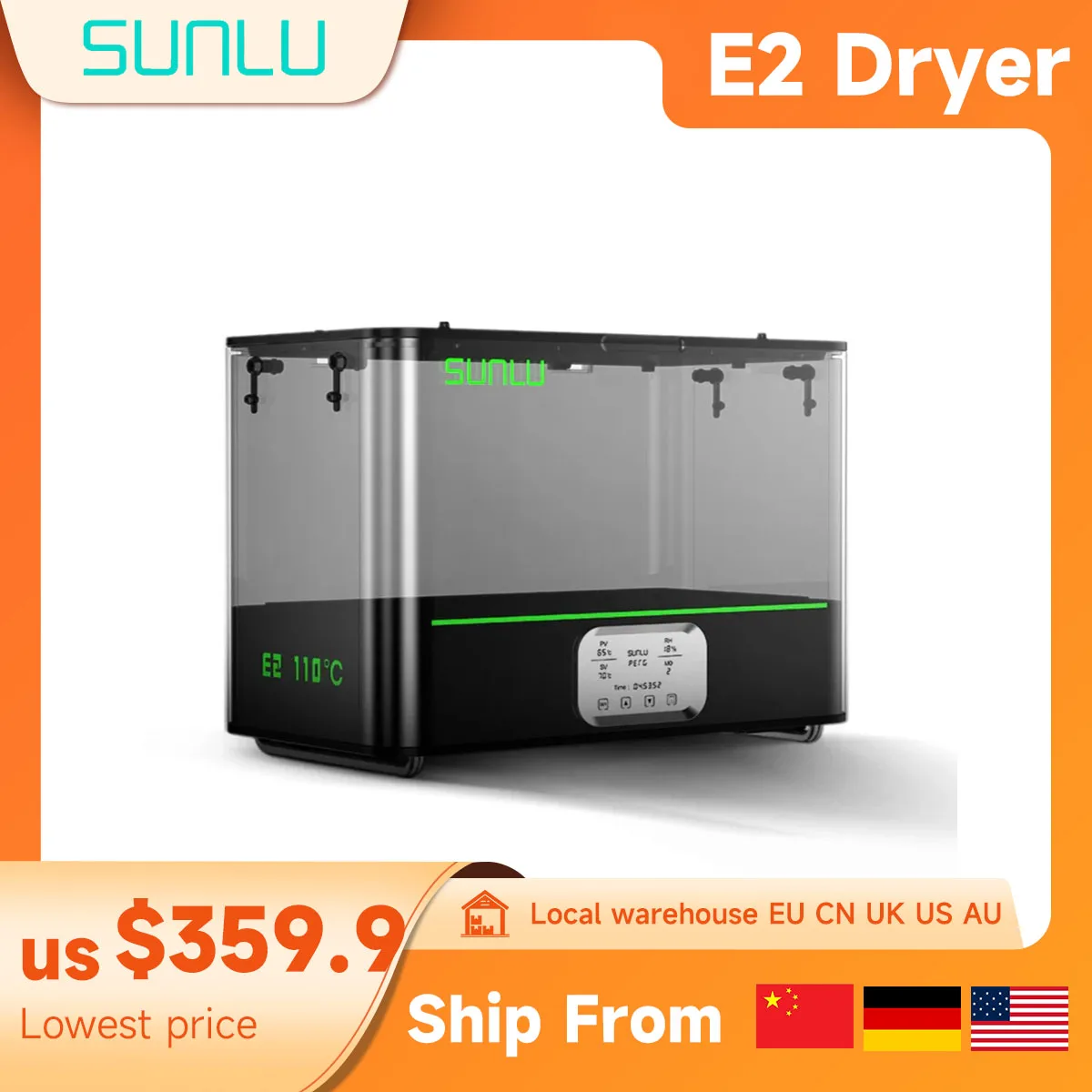
SUNLU E2 Filament Dryer Box SUNLU S4 FilaDryer E2 Up to 110℃ Professional Drying and Annealing Born for Engineering 3D Printing
$102.07